Thanks to Jane Keeler I found this wonderful travelogue “Russian Chronicles”. Lisa Dickey and David Hillegas come back to Russia and make the same trip they did in 1995 visiting the same places and interviewing people that met ten years ago. Apart from being a very interesting story teller Lisa Dickey is also very open minded. She is probably the first American mainstream journalist that is sincerely friendly towards this country. Her criticisms do not sound as mean finger pointing. No meaningless rants and preaching. Then she is probably the first journalist that openly accepts that life in Russia became much better in general. Not the usual ‘rich Russians are obnoxiously rich but most of the people live in poverty’ stuff one reads in Washington Post or Wall Street Journal.
My previous post was about Russian rudeness. Lisa Dickey’s last post is about Russian railway trains and over the top Russian “friendliness” one finds there. I prefer to travel by air but from time to time as I take a train I meet the same problems as JJ. Only she had to stand for America and answer questions about Bush politics but I have to defend Moscow and ‘filthy rich’ Muscovites who grab resources from all over the country.
Tuesday, October 18, 2005


Tuesday, October 11, 2005
Russians and Europeans
The All-Russian Сenter of the Public Opinion Studies (VTSIOM) presented to the public the results of it poll about how frequently Russians and the citizens of the European Union think about the sense of life.
As a study showed, 43% of Russians and 35% of Europeans frequently think about the sense of life and its ultimate purpose, while 32% and 39% respectively do it from time to time.
Russian women (49%) think about the sense of life more frequently in comparison with men (37%). It seems that philosophizing is closely correlated with the level of income. Only 39% Russians with higher incomes contemplate on the purpose of human existence.
On average, Russians are as religious as Europeans. 53% of Russians believe in God (plus 25% believe in the existence of life after death). Respectively, 52% of Europeans believe in God (plus 27% believe in life after death). In Russia there are 16% of atheists comparing to 18% in EU.
45% of Russians and 54% of Europeans practically always or frequently have trust in other people, sometimes 31% and 34% respectively.
Rarely or almost never trust other people 23% of Russians and 11% of the EU citizens. Russians over 60 years of age trust other people more often – 55% of respondents. Almost as Europeans in general.
The poll was conducted in September 2005, 1,6 thousand respondents were in almost all regions of Russia. The results were compared to the results of the poll conducted in the countries of the EU in June 2005.
As a study showed, 43% of Russians and 35% of Europeans frequently think about the sense of life and its ultimate purpose, while 32% and 39% respectively do it from time to time.
Russian women (49%) think about the sense of life more frequently in comparison with men (37%). It seems that philosophizing is closely correlated with the level of income. Only 39% Russians with higher incomes contemplate on the purpose of human existence.
On average, Russians are as religious as Europeans. 53% of Russians believe in God (plus 25% believe in the existence of life after death). Respectively, 52% of Europeans believe in God (plus 27% believe in life after death). In Russia there are 16% of atheists comparing to 18% in EU.
45% of Russians and 54% of Europeans practically always or frequently have trust in other people, sometimes 31% and 34% respectively.
Rarely or almost never trust other people 23% of Russians and 11% of the EU citizens. Russians over 60 years of age trust other people more often – 55% of respondents. Almost as Europeans in general.
The poll was conducted in September 2005, 1,6 thousand respondents were in almost all regions of Russia. The results were compared to the results of the poll conducted in the countries of the EU in June 2005.
Tuesday, October 04, 2005
Why Russians Do Not Smile
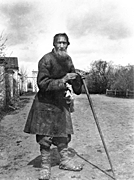
Russia Profile published an article by Olga Nikitina “Combining a Rude and Very Hospitable Reputation” on a very interesting topic about Russian culture. How can the same people be so rude and so hospitable in different situation?
Olga Nikitina writes:
Foreigners who come to Russia are often struck by the indifferent, closed, or even hostile looks from people on public transportation and in the streets. One widespread opinion is that Russians rarely smile. On the other hand, Russians are also well known for their hospitality, and have a reputation for being extremely generous friends.
There are sociological reasons behind both types of behavior. According to Elena Zdravomyslova, a professor at the European University in St. Petersburg and research coordinator at the Center for Independent Social Research, the apathy demonstrated by Russians in public could be a means of psychological defense. “In post-Soviet Russia, the level of personal security has decreased dramatically,” she said. “If you are attacked in the street, the police cannot help you. Nobody can really defend you. The instability of social structures also makes people avoid contacts that could jeopardize their safety, or even develop aggressive behavioral strategies. Being autonomous is safer.”
This conclusion is very surprising and to my mind unprofessional. I don’t think it’s correct to explain a cultural phenomenon that is at least 500 years old by some 15 years post-Soviet period. The opinion about Russians as at times unsmiling and rude but in other circumstances as very friendly and hospitable one easily finds in the accounts of European travelers on Russia already in the 15th and 16th century. For example, E. de Corte compares French peasants who are friendly when they are sober and very aggressive when drunk to Russians – when sober they are sullen but when drunk hug and kiss each other.
One only needs to read about Levin’s relationships with his peasants in “Anna Karenina” to find the “secret” of this paradoxical behavior. Bezukhov’s adventures during the French retreat from Moscow in “War and Peace” also give a lot of insights.
Russian culture is basically the culture of Russian peasantry communes. I believe hundreds of ethnographers wrote about it. Commune here is a key word. Why is this culture so prevailing today? In 1917 before the Communist Coup 87% of Russian population was rural. At the beginning of 1970’s only 18% of Russians were engaged in agriculture. Most of Russians can live in big cities but they still behave as if they belong to a small community and the nearest village is a hundred miles away.
When you live in Siberia in a small rural commune you should be very distrustful of every stranger. Moreover – strangers should feel immediately that you are hostile towards them. Only when a stranger proves beyond doubt that (1) he wants to belong to the commune, (2) he accepts all laws and traditions of this particular commune, (3) he can be trusted; only then he is accepted. And an accepted member of the commune enjoys so much trust, friendliness, openheartedness and sincerity that is very surprising to Europeans and who think that Russian openness is over the top.
Actually the “secret” of Russian democracy is also rooted in the culture of peasantry communes. Inside the commune people have their own laws, traditions, judges, principles and values. Every time the government tries to impose its laws, its attempts are met with peasants’ revolts and revolutions. On the other hand people delegate the tsar and the Orthodox Church all the problems outside communal life. The tsar can make any laws he likes as long as such laws help keeping this huge country together and do not contradict the laws of the commune. Not “commune” in general but every particular commune with its particular laws, be it in Siberia, in the Far East, in the Northern taiga or in the Southern steppes.
Friday, September 30, 2005
Million Pieces of Shit

I looked up Amazon.com sales ranks and couldn’t believe my eyes – “Million Little Pieces” by Frey is No.1. It’s recommended by Oprah! What happened to America? What happened to Oprah? I got this book about three months ago. I gave one American exchange student Pelevin’s “Omon Ra” and she gave me Frey’s masterpiece as a sample of contemporary American literature. I read about 50 pages and put the book down. That student definitely hated me or wanted to taunt me with this worthless piece of junk.
There’s an alternative newspaper “Exile” in Moscow that published probably the best review of that Frey’s book. It’s written by John Dolan. Here are some extracts from that review – “A Million Pieces of Shit”
John Dolan writes:
That's it. 400 pages of hanging around a rehab clinic.
It feels longer. It feels like years.
For all Frey's childish impersonation of the laconic Hemingway style, this is one of the most heavily padded pieces of prose I've seen since I stopped reading first-year student essays. Frey manages to puff up this simple story to book length thanks to one simple gimmick: he repeats. Repeats the beginnings of sentences. Repeats the beginnings of phrases. And the endings. Endings of phrases. Phrases and sentences.
And while his prose is repeating, his tale is descending. Descending into Bathos. Bathos in which he wallows. Wallows. In bathos. Bathos, bathos, bathos.
The results can be quite funny, altogether unintentionally, as when Frey tries to dramatize the travails of love:
"I start crying again.
Softly crying.
I think of Lilly and I cry.
It's all I can do.
Cry."
I found myself laughing every time I read this, imagining Daffy Duck doing the scene: "It'th all I can do!" then turning to the audience to clarify things: "Cry, that ith."
<…>
I found myself becoming morbidly fascinated by the number of conjunctions Frey could pile into a single sentence. The one I just quoted has six "and"s. Not bad, but hardly a record. A few pages earlier, Frey offers a sparkling account of getting a bowl of oatmeal which is sustained by seven "and"s; "...I see that I'm late and I see People look up and stare at me and I ignore them and I get a bowl of gray mushy oatmeal and I dump a large pile of sugar on it and I find a place at an empty table and I sit down."
<…>
Walking on a trail outside the clinic, Frey names and capitalizes everything: "Trail," "Tree," "Animals." Then he sees a lower-case "bird." I was offended for our feathered friend. Why don't the birds get their caps like everybody else?
But then Frey is no expert observer, as he proves in one of the funniest scenes from his nature walks, when he meets a "fat otter": "There is an island among the rot, a large, round Pile with monstrous protrusions like the arms of a Witch. There is chatter beneath the pile and a fat brown otter with a flat, armored tail climbs atop and he stares at me."
Now, can anyone tell me what a "fat otter with a flat, armored tail" actually is? That's right: a beaver! Now, can anyone guess what the "large, round Pile with monstrous protrusions like the arms of a Witch" would be? Yes indeed: a beaver dam!
<…>
Luckily, Daddy has to take off for Brazil, and Frey can return to bizarrely detailed descriptions of every single hug and tearful farewell between him and his new pals.
And I mean detailed. It takes Leonard and his new son three pages just to get out to the limo. And there, of course, there must be another maudlin goodbye, stretched to absurd length. Anyone else would've said, "We hugged and said goodbye," but Frey takes you through every step of the process, padding his bathos as if explaining "hug" to a Martian: "Leonard steps forward. He puts his arms around me and he hugs me. I put my arms around him and I hug him. He lets go and he steps away and he looks in my eyes and he speaks."
<…>
Frey and his tough-guy friends spend more time weeping and hugging than the runners-up in a Miss America competition. Frey's aggressively male stance has something archaic, even campy about it. Frey has placed the entire book in a gender-segregated institution, recalling Hemingway's title Men without Women. (Male patients are not allowed to say anything more than "Hello" to female patients in Frey's rehab center.) And like most homoerotic novelists of the 1930s, his true period, Frey resorts to violence to prove he's no homosexual, confessing (that is to say, boasting) that he beat a French priest to death for daring to place his hand on Frey's utterly masculine thigh.
<…>
Oh, but that's nothing. He's got a million sob-scenes more self-indulgent and false than that one. How about this example of closely-observed detail: "[Lilly] smiles. With her lips, her teeth, her eyes, her shaking hand." I just wish I could figure out how she managed to make her shaking hand smile. That would be worth watching.
As his utterly unconvincing romance with Lilly progresses, Frey dives deeper and deeper into cliche: "I am in love with a Girl, a beautiful and profoundly troubled Girl who is alone in the World...."
The man was born too late; he should have been writing subtitles for silent-film melodrama.
<…>
And before we can even wipe the tears from our eyes, Frey is parting from his counselor and her tough yet sensitive Fisherman boyfriend: "I step forward and I hug her. There is emotion in the hug, and there is respect and a form of love. Emotion that comes from honesty, respect that comes from challenge, and the form of love that exists between people whose minds have touched, whose souls have touched. Our minds touched. Our hearts touched. Our souls touched."
If you can find a worse paragraph than that in any published book, I'd like to see it. At least it disposes of one more character. Alas, Frey must still hug the Counsellor's boyfriend, who says -- I swear to God, this is a direct quote: "I ain't much for words, kid."
<…>
Never mind, never mind; it's time to take the bags out to the car and meet Frey's brother, who's come to take him home. Guess what they do first! Yeah: they hug: "He hugs me. I hug him." It's these sudden twists that make Frey's story such a page-turner.
<…>
And this self-aggrandizing, simple-minded, poorly observed, repetitious, maudlin drivel passes for avant-garde literature in America?
I agree completely.
Wednesday, September 28, 2005

Tuesday, September 27, 2005
You don't need to be smart to be a CEO
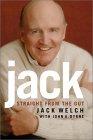
What strikes you first when you start reading the book “Jack: Straight from the Gut” - Jack Welch is definitely not dumb, but he is not smart either. He's IQ should somewhat between 90-100 but as his story shows you don't need to smart to be the most admired CEO in the US. Actually what you really need for success:
(1) Single-mindedness and total concentration on one goal. Devote all your time and all your efforts on reaching this goal. Just don't analyze it, don't think it over and as a result - never hesitate. It's surprising how many people miss one thing - Welch's idea "be No.1 or No.2 or ..." is flawed! Later he admits himself that managers could narrow the market and become No.1. And this is not just "hmm, thanks for telling me this" - it's a fundamental methodological mistake. It simply means that the whole idea was not really thought over and was never analyzed. But thousands of people who didn't like it were fired from GE.
(2) Create corporate culture. As Jack shows this actually means - meet as many people as you can and if you find someone who is like you (passionate, loud, confident, concentrated, ruthless and aggressive) make him your VP immediately (and fire the "non-culture" guy who occupied it). Then - and this is the most important thing! - give him impossible goals and if he doesn't deliver - fire him too. This way very soon you have your top management who look like your clones and your middle management tries hard to mimic. And it's a surprise how many people missed it - Welch's list of GE values is flawed. They are not values - they are personal traits of character, description of certain individuality, self-portrait of Jack himself.
(3) Never have any emotional attachments to anyone - business and nothing but business. Welch describes all his so called "friends" only from the business and effectiveness point of view. The only person he is emotional about is his mother. His words "I loved my dad" sound as an excuse. Jack ruined his family not because he was working too hard - he had all week-ends for himself (even long week-ends!). He spent them playing golf instead of playing with kids. It comes to him as a surprise that golfing is not a good idea when you invite your girlfriend for a romantic weekend.
Please, pay attention - Welch never reads books, Welch had only two weeks of business training in marketing, Welch likes to teach but hates to be taught, Welch prefers learning by trial and not by analysis. And then - read this book again if you don't agree - Welch lacks strategic thinking. With his one "strategic" in head he just makes a lot of selling and buying everything that he has a gut for. Anyway, you don't need to be smart to be a CEO.
Thursday, September 22, 2005

Subscribe to:
Posts (Atom)


